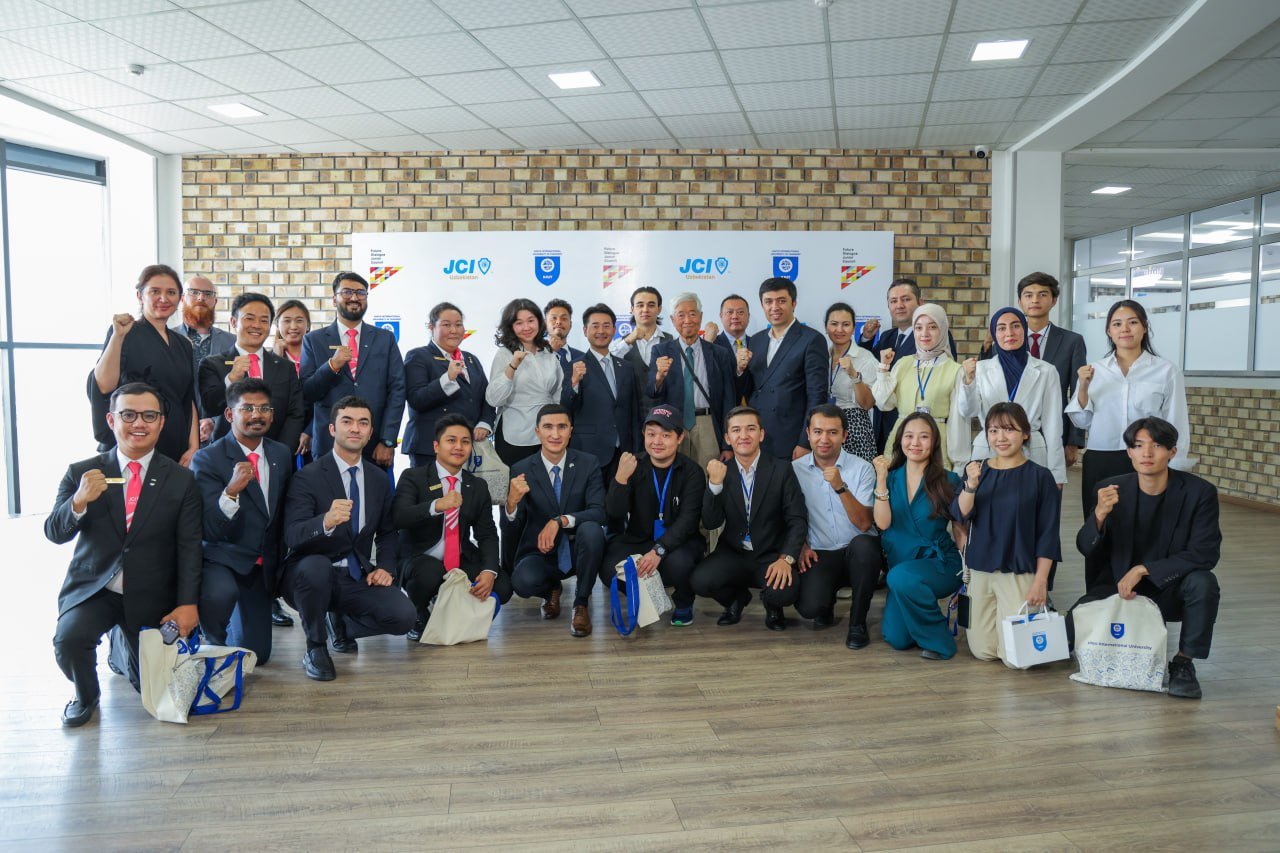
Education That Hears Student Voices: Future Dialogue — Japan × Uzbekistan
What kind of education enables young people to believe that “My voice has the power to change society”?
This question was at the heart of the international debate held at Kimyo International University as part of Future Dialogue: Japan × Uzbekistan. Students from Uzbekistan and Japan, together with international experts and representatives of youth organizations, discussed the role of young people in society, the future of education, and the importance of student participation in decision-making.
Today, it is no longer enough to view students simply as recipients of knowledge. A university should also provide an environment where young people learn to develop their own perspectives, express and defend their ideas, listen to different viewpoints, and engage with the issues shaping society.
For this reason, one of the central themes of the discussion was student voice — and why listening to it matters.
Students experience the education system firsthand. They understand which approaches work, what opportunities may be missing, and what could be improved. Listening to students, therefore, is not simply a matter of communication; it can be an important tool for improving the quality and relevance of education.
But hearing student voices means more than giving young people an opportunity to speak. It means creating an environment where students know that their opinions are taken seriously, their initiatives can receive support, and constructive ideas can contribute to meaningful change.
During the debate, the goal was not to find a single “correct” answer. Instead, students were encouraged to ask questions, listen to different perspectives, explain their positions, and engage in open dialogue. The different cultural and social experiences of students from Uzbekistan and Japan added particular value to the discussion.
This is also what makes international dialogue meaningful: young people listen to international experts, but international experts also listen to young people.
The belief that “my voice matters” does not develop overnight. It grows in classrooms where students feel free to ask questions, through open discussion, through meaningful interaction between students and educators, and within a university culture that takes young people and their initiatives seriously.
A university that listens to its students does more than educate qualified professionals. It helps shape a generation capable of independent thinking, expressing its views, taking initiative, and recognizing its responsibility to society.
This was the central idea behind Future Dialogue: Japan × Uzbekistan: what kind of education can help young people not only find their voice, but also believe that their voice truly has the power to change society?