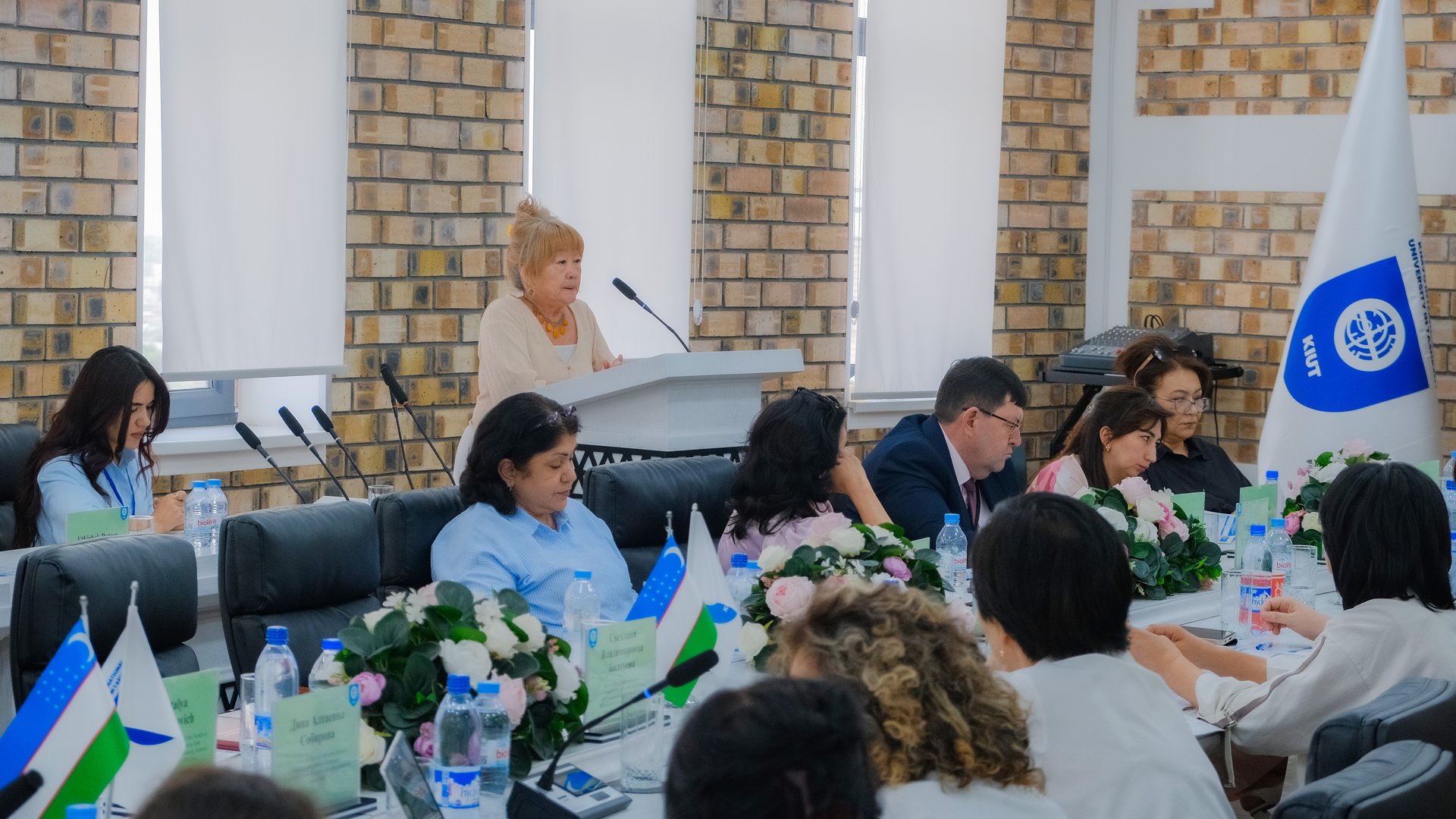
Can artificial intelligence help preserve linguistic heritage, and can neural networks transform the way languages are taught and learned?
These and other timely questions were at the center of the International Scientific and Practical Conference “Russian Language and Literature as a Mirror of Civilization: Traditions, Culture, and Modernity,” held on June 5–6, 2026, at Kimyo International University in Tashkent.
Scholars and educators from Uzbekistan, Russia, Belarus, Azerbaijan, and Kazakhstan discussed current trends in language education, the use of neural network technologies in teaching, the development of digital communication, and the preservation of linguistic and cultural heritage in the era of rapid digital transformation.
The conference served as an important international platform for academic exchange, professional dialogue, and the exploration of new ideas at the intersection of humanities and modern technologies.